Capturing the Charm of Scottish Village Backgrounds for Designers
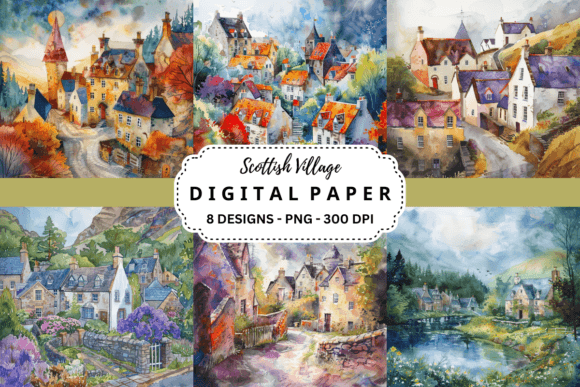
There is a specific, almost tangible quality to the Scottish Highlands—the way the light hits the stone walls of a cottage, the rugged texture of the terrain, and the moody, atmospheric skies that seem to hold a thousand years of history. For creative professionals, capturing this essence without physically being there requires a toolbox of high-fidelity assets. This is where the specific asset pack of Scottish Village Backgrounds enters the conversation. It is not merely a collection of images; it is a curated set of eight high-resolution digital canvases designed to bring that distinct, rustic European aesthetic to modern projects.
As a designer or entrepreneur, you know that the backdrop of your project dictates the mood. A flat, sterile background communicates modern minimalism, but a rich, textured scene communicates warmth, heritage, and narrative. These backgrounds, delivered as individual PNG files at a staggering 300 DPI and 3600 x 3600 pixels, offer the kind of premium resolution that allows for aggressive cropping and large-format printing without pixelation. Whether you are building a brand identity for a craft distillery or designing a wedding invitation suite, understanding how to deploy these assets effectively is key to elevating your work from amateur to professional.
The Visual Narrative: Texture, Atmosphere, and Authenticity
When you first open the files, the immediate impression is one of depth. These are not flat, vectorized illustrations of villages; they are photographic or photo-realistic renders that emphasize the gritty reality of the Scottish landscape. You will notice the interplay between the stone architecture of the cottages and the organic, often wild, surrounding nature. This visual tension is a powerful tool. In packaging design, for example, this texture can signal to the consumer that the product inside is artisanal or hand-crafted.
The "personality" of these backgrounds is undeniably rustic, vintage, and atmospheric. They evoke a sense of solitude and tradition. For editorial design, this is invaluable. Imagine a magazine feature on travel or heritage fashion; placing your typography over a high-contrast section of a stone wall creates an immediate focal point. The 3600-pixel dimension is particularly useful here, as it allows you to use a portion of the image as a subtle texture or a full-bleed background, giving you flexibility in your visual hierarchy.
However, working with such detailed backgrounds requires a strategic approach to readability. Because these images are rich in detail—slate roofs, greenery, stone textures—placing text directly onto a busy area can cause the eye to strain. A practical tip for using this design asset is to employ overlay techniques. Using a semi-transparent dark gradient or a "scratched paper" overlay can break the image just enough to make white or light-colored serif fonts pop without losing the atmospheric charm of the village scene.
Strategic Applications: From Digital Screens to Print-on-Demand
The versatility of Scottish Village Backgrounds extends well beyond simple scrapbooking, though they excel there as well. For the modern content creator or marketer, these assets serve as a bridge between digital engagement and tangible products.
In the realm of social media graphics, consistency is king. If you are managing a brand that deals in tourism, outdoor apparel, or even cozy home goods, these backgrounds provide a consistent thematic anchor. You can use them as the base for quote cards, sale announcements, or story highlights. The moody aesthetic pairs exceptionally well with modern typography, specifically clean sans serif fonts. The sharp, geometric lines of a sans serif typeface against the organic, irregular lines of a Scottish village create a striking contrast that is very popular in contemporary web design and Instagram aesthetics.
For those in the print-on-demand market, the 300 DPI resolution is your best friend. This specification is the industry standard for high-quality printing. It means these backgrounds can be applied to:
- Poster & Banner Design: Creating wall art for home decor that appeals to lovers of Celtic or British aesthetics.
- Wrapping Paper: Tiling the image or using a section to create unique, boutique-style gift wrap.
- Invitations and Cards: Perfect for destination weddings or themed parties where the setting needs to be communicated visually.
When selecting a typeface to pair with these backgrounds, consider the era and style you wish to evoke. A script font or a handwritten font can enhance the romantic, personal feel of a cottage scene, making it ideal for wedding invitations. Conversely, a bold, modern display font can modernize the rustic setting, making it suitable for a trendy coffee shop menu or a boutique hotel website.
Technical Integration and Workflow Efficiency
One of the biggest challenges in design is finding assets that are "print-ready" without hours of color correction or upscaling. Because these Scottish Village Backgrounds are provided as individual PNG files, they support transparency and layering seamlessly in software like Adobe Photoshop, Illustrator, or Affinity Designer.
From a brand identity perspective, using a background like this helps establish a sense of place. If your brand story involves heritage, craftsmanship, or a connection to nature, these images act as visual shorthand. However, be mindful of commercial licensing. Always ensure that the specific license included with your purchase allows for the intended commercial use, especially if you plan to sell the final product (like a printed poster or a digital template) to end consumers.
Evaluating the fit of these backgrounds involves looking at your existing color palette. The Scottish landscape typically features muted greens, slate greys, warm browns, and heather purples. If your brand uses neon colors or pastels, you may need to apply color grading to the background to ensure harmony. A practical workflow step is to use the "Hue/Saturation" adjustment layer to desaturate the background slightly, allowing your foreground elements—be it a logo or a headline—to take center stage.
Ultimately, Scottish Village Backgrounds offer a robust solution for creatives seeking to add depth, history, and a touch of rugged beauty to their projects. By treating these images not just as filler, but as integral components of your design strategy, you can create work that feels grounded, professional, and emotionally resonant. Whether you are designing a logo for a local pub or curating a travel blog, the right background sets the stage for the story you want to tell.